Turning thirty is often the moment I realize that my recovery takes longer, waistlines expand faster, and the same gym routine from my twenties no longer delivers. I looked enough to find a sustainable, joint-friendly, and scientifically proven way to rebuild my cardiovascular fitness, and improve my recovery.
Cycling deserves a spot at the top of your list. It is not just a leisure activity or a commute hack—it is one of the most effective tools for improving VO2 max, metabolic health, and long-term longevity for men in their thirties and beyond.
Why Cycling Fits the 30-Plus Body
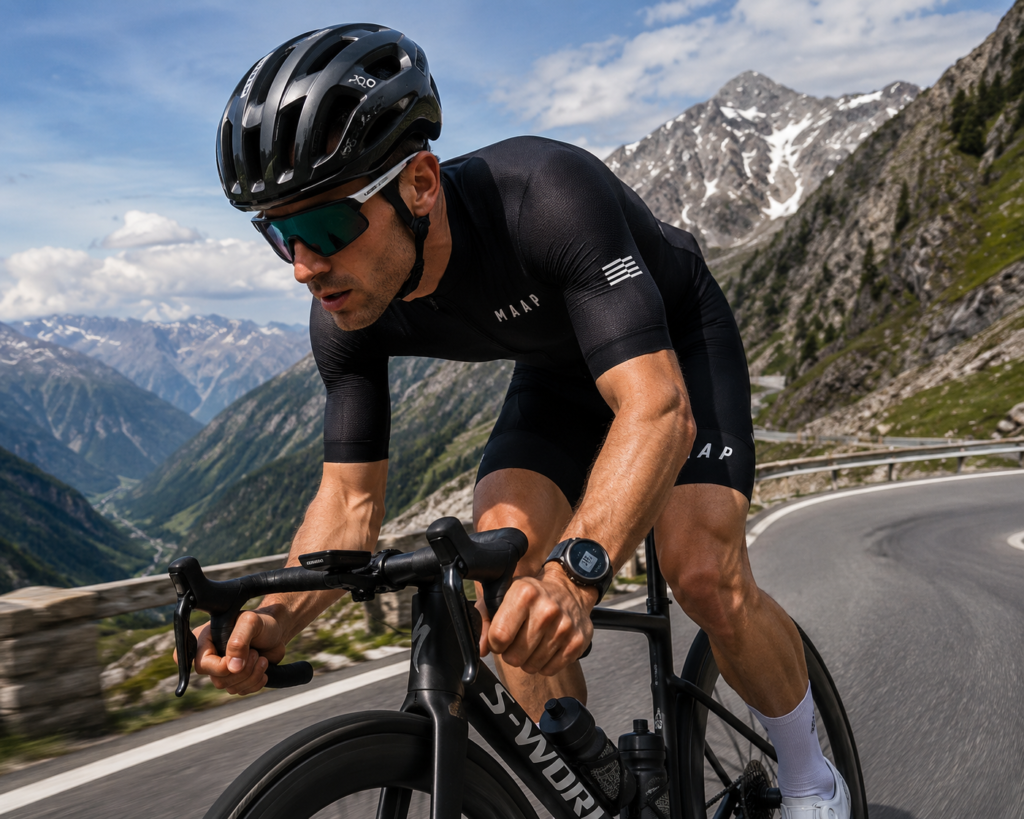
The first and most practical advantage of cycling is that it is low-impact. Unlike running or plyometric training, which place significant stress on knees, hips, and ankles, cycling allows you to elevate your heart rate without pounding your joints. For men over thirty who may already be managing early signs of wear and tear—or who are returning to exercise after a hiatus—this matters immensely. You can train hard without the chronic injury risk that often sidelines runners.
Cycling is also a rare hybrid of strength and cardiovascular work. Riding hills, sprinting out of the saddle, or pushing high resistance on a stationary bike builds lower-body strength and core stability while simultaneously training your aerobic engine. A thirty-minute session can spike your heart rate into conditioning zones, improve muscular endurance in your quads, glutes, and calves, and develop balance and coordination if you ride outdoors.
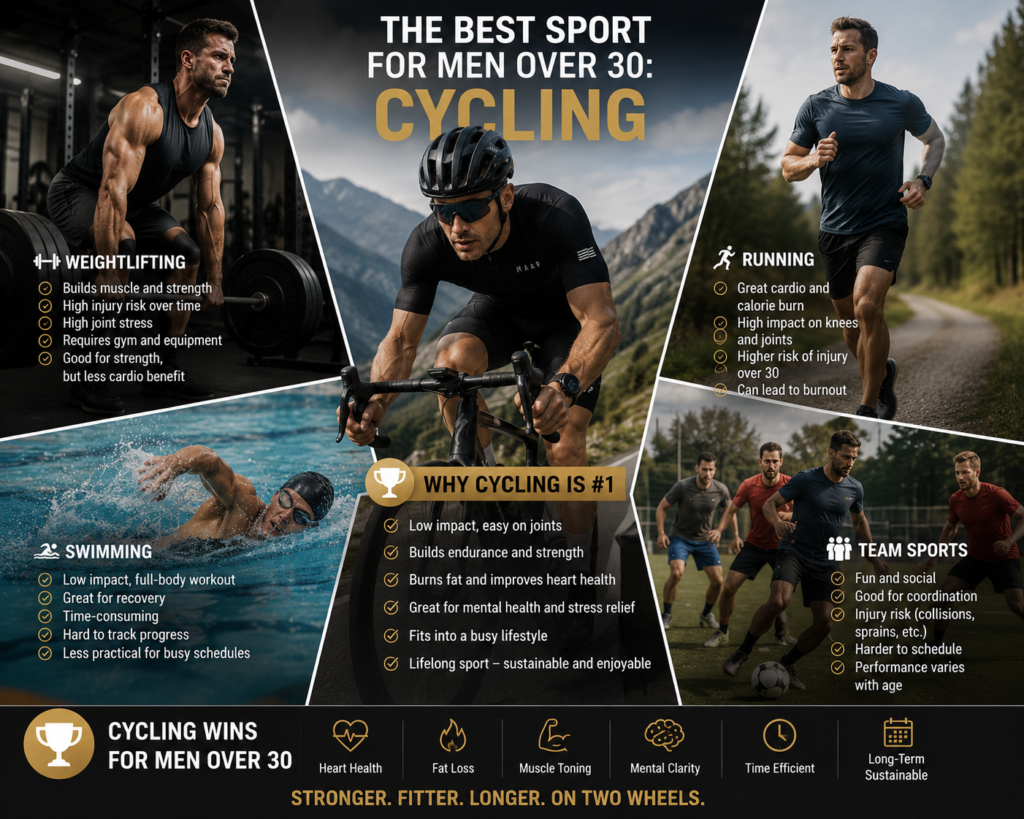
Perhaps most importantly for this demographic, cycling is exceptionally efficient for time-crunched professionals. A focused forty-five-minute indoor or outdoor ride can deliver cardiovascular benefits that rival much longer steady-state sessions. When structured correctly, it becomes a precision tool for improving the single metric most correlated with longevity: VO2 max.
Understanding VO2 Max and Why It Matters After 30
VO2 max measures the maximum volume of oxygen your body can utilize during intense exercise, expressed in milliliters per kilogram of body weight per minute. It is widely regarded as the gold standard for cardiovascular fitness because it reflects how efficiently your heart, lungs, and muscles work together.
After age thirty, VO2 max begins a natural decline in untrained men, dropping roughly one percent per year. The consequence is not just slower 5K times—it is a measurable increase in risk for heart disease, metabolic syndrome, and all-cause mortality. The good news? Research published in JAMA Network confirms that better cardiorespiratory fitness is inversely associated with long-term mortality, with no upper limit to its benefits. In other words, the fitter you become, the longer and healthier you are likely to live.
Harvard Health notes that increasing your VO2 max is associated with reduced risk of heart disease, diabetes, cancer, and stroke, alongside improved sleep and quality of life. For men over thirty, investing in VO2 max is not about becoming an elite athlete; it is about halving your cardiovascular risk and maintaining the energy to keep up with career demands, family life, and weekend adventures.
Building the Routine: A Framework for Masters Cyclists
If you want to use cycling to move the needle on VO2 max and overall health, random rides are not enough. You need structure. Here are the keys to building a solid workout regimen.
- Establish an Aerobic Base First
Before you attack high-intensity intervals, spend six to eight weeks building a Zone 2 foundation. This means riding at a conversational pace—roughly 60 to 75 percent of your maximum heart rate—for sessions lasting sixty to ninety minutes. Zone 2 training stimulates mitochondrial growth, improves fat oxidation, and builds the aerobic capacity that underpins every harder effort you will do later.
- Target VO2 Max with Specific Intervals
Once your base is solid, introduce one dedicated VO2 max session per week. The intensity target is typically 105 to 120 percent of your Functional Threshold Power (FTP), or a heart rate approaching maximum. Three proven formats work particularly well for men over thirty:
- The 4-Minute Classic: Four to six repeats of four minutes at 105 to 115 percent of FTP, with three to four minutes of easy spinning recovery. This is the most researched interval format and drives heart rate and oxygen uptake to true maximum.
- The 30/15 (Rønnestad-style): Three sets of twelve to sixteen repetitions of thirty seconds at 110 to 120 percent of FTP, followed by fifteen seconds of easy pedaling. The short recovery keeps your heart rate elevated, meaning you accumulate more total time at VO2 max than with longer rest periods.
- Over-Unders: Alternate two minutes at 95 percent of FTP with thirty seconds at 115 percent. This mimics real-world racing surges and trains your body to clear lactate while under pressure.
For masters athletes, one quality VO2 session per week is generally more productive than two mediocre ones. Recovery costs are real, and the session demands a fresh body to be effective.
- Add Threshold and Tempo Work
Between your VO2 days, incorporate longer intervals at or just below threshold—roughly 88 to 105 percent of FTP. These sessions improve lactate clearance, increase plasma volume, and raise the power you can sustain for prolonged periods. A typical session might include two to three blocks of ten to twenty minutes at tempo pace, with five minutes of recovery between.
- Prioritize Recovery and Periodization
Men over thirty cannot ignore recovery. Sleep, nutrition, and rest days are where adaptation actually occurs. Program a lighter recovery week every third or fourth week, and avoid stacking hard sessions on consecutive days. Strength training can complement your cycling, but staggering the two—rather than layering heavy squats and VO2 intervals in the same forty-eight-hour window—will prevent overreaching.
- Track Metrics Beyond the Scale
Use a heart rate monitor or power meter to track progress. Re-test your FTP every eight to ten weeks. Notice not just your power numbers, but also how quickly your heart rate drops after intervals, how you sleep, and how your energy feels during non-training hours. VO2 max gains are often reflected in everyday stamina before they show up in lab tests.
A Sample Week
- Monday: Rest or mobility work
- Tuesday: VO2 max intervals (e.g., 4×4 minutes or 30/15s)
- Wednesday: Easy Zone 2 spin (45–60 minutes)
- Thursday: Threshold/tempo session (2×20 minutes at 90–95% FTP)
- Friday: Rest or light cross-training
- Saturday: Long Zone 2 ride (90 minutes to 3 hours)
- Sunday: Easy recovery spin or off
The Bottom Line
For men over thirty, cycling offers a rare combination of joint preservation, muscular engagement, and cardiovascular stimulus. When structured around VO2 max development, it becomes a longevity strategy, not just a workout. The decline in aerobic capacity that often accompanies aging is not inevitable—it is reversible with consistent, intelligent training. Build your base, hit your intervals with purpose, respect your recovery, and let the bike carry you into your fittest decade yet.